


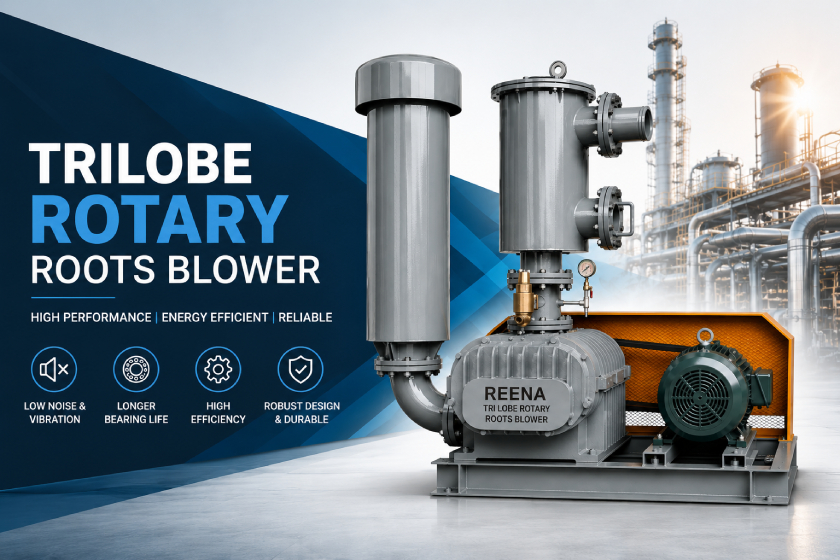
Reena Engineers manufactures twin lobe air compressors (Roots blowers) for low-pressure, high-volume air supply with continuous, pulsation-free flow. They are widely used in pneumatic conveying systems to transport powder, cement, fly ash, grains and chemicals through pipelines, and in water treatment plants for aeration.
REG series models are engineered for continuous industrial duty with air cooled design, oil-free air options and flexible vertical or horizontal installation to suit your plant layout.
Why choose our twin lobe compressors
Reliable pneumatic power for conveying, aeration and process air across demanding plant environments.

high volume air supply
Delivers steady low-pressure air for bulk material conveying and long pipeline runs.

continuous air flow
Roots blower design provides uninterrupted flow for non-stop production lines.

oil-free operation
Suitable for sensitive applications where clean, oil-free compressed air is required.

wide industry use
Trusted in cement, sugar, chemical, fertilizer, STP, ETP and RMC plants across India.
Applications & industries
Typical installations and industries for our twin lobe air compressor solutions across India.
- Cement Industry
- Sugar Industry
- Chemical Plants
- Fertilizer Plants
- Sewage Treatment Plants (STP)
- Effluent Treatment Plants (ETP)
- Ready Mix Concrete (RMC) Plants
- Pneumatic Conveying Systems
Frequently asked questions
It supplies low-pressure, high-volume air for pneumatic conveying of powders and bulk materials, process aeration, and continuous industrial air requirements.
Cement, sugar, chemical, fertilizer, sewage and effluent treatment, ready mix concrete, and pneumatic conveying plants across India.
Yes. Our twin lobe compressors can deliver 100% oil-free air for applications where contamination must be avoided.
Yes. Units are available with vertical or horizontal air flow and adjustable feet for easy plant integration.
Yes. Reena Engineers manufactures and supports equipment from Vatva, Ahmedabad, Gujarat under Make in India standards.